


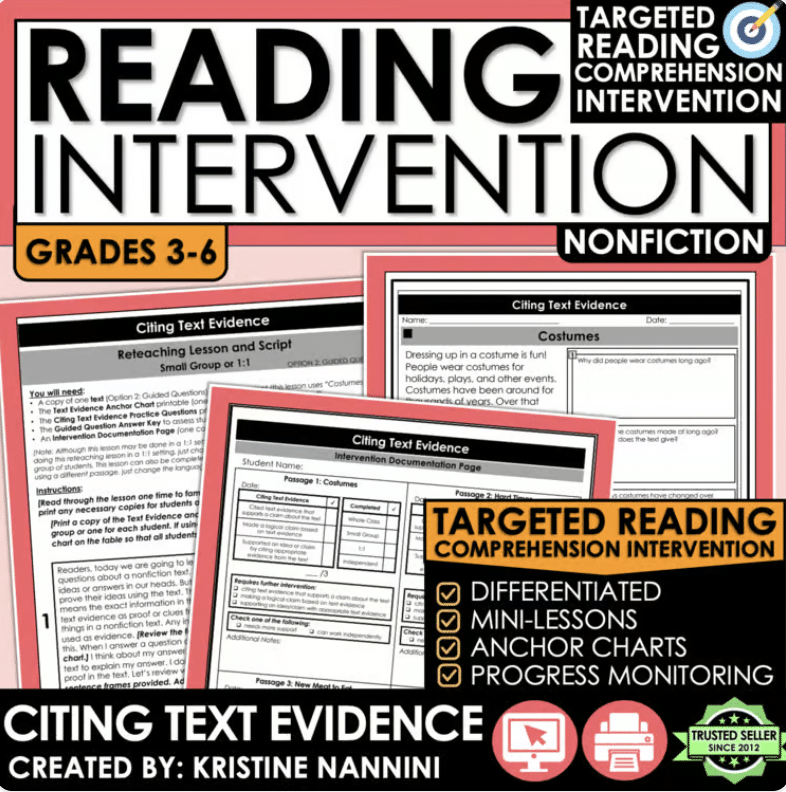
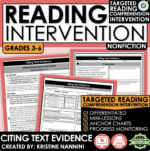
Nonfiction Reading Intervention Passages + Questions: Citing Text Evidence


$13.00
# of Pages: 98
|
- |
- Google Apps
Description
Explicit Reading Comprehension Support for Struggling Readers
Struggling readers often answer questions based on what they think instead of what the text actually says.
This Nonfiction Citing Text Evidence Intervention Toolkit teaches students how to locate, select, and explain evidence from informational texts—an essential skill for deep comprehension and written responses.
Instead of giving vague or unsupported answers, students learn how to go back into the text, find relevant details, and use those details to support their thinking.
Through structured lessons and scaffolded questioning, students learn how to:
- Locate relevant evidence within a nonfiction text
- Select details that directly support a question or idea
- Use sentence stems to clearly cite evidence
- Explain how the evidence supports their answer
This skill-focused intervention uses intentionally leveled nonfiction passages so students can focus on learning how to support their thinking with evidence without being overwhelmed by text complexity.
Perfect for 1:1 intervention, small groups, RTI blocks, or targeted test prep, this resource provides a repeatable structure that helps students consistently back up their answers with the text.
You’ll Love:
- Explicit instruction that shows students exactly how to find and use text evidence
- Structured questioning that walks students through the thinking process
- Differentiated passages designed specifically for struggling readers
- Built-in scaffolds that guide students toward independent responses
What You Get:
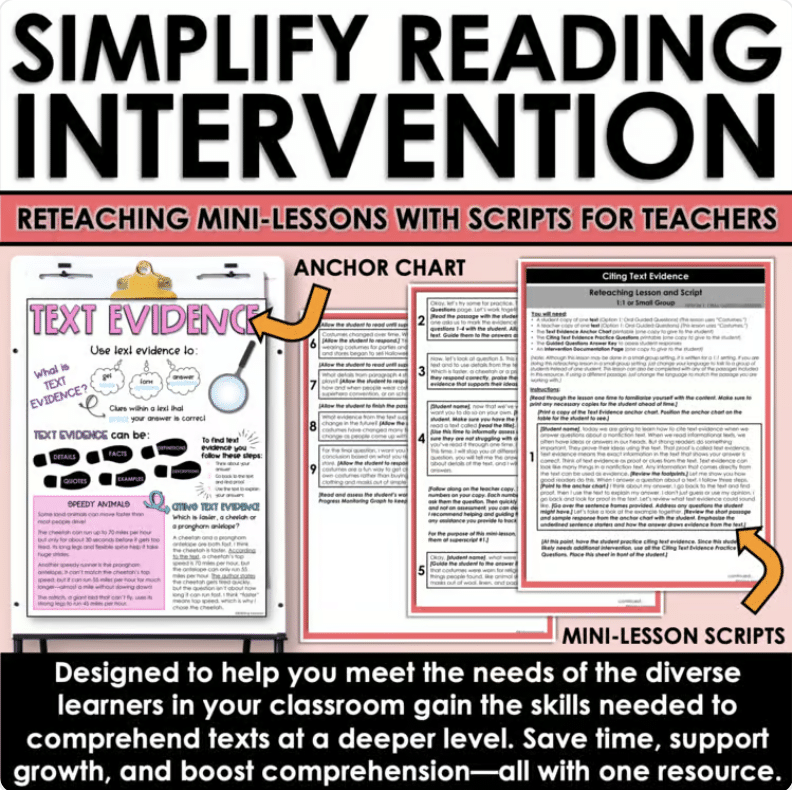
Reteaching Mini-Lessons with Scripts for Teachers
- Teacher scripts for clear, consistent instruction
- Explicit lessons focused on citing evidence from nonfiction text
- Modeling how to locate and explain supporting details
- Designed for Tier 2 and Tier 3 intervention
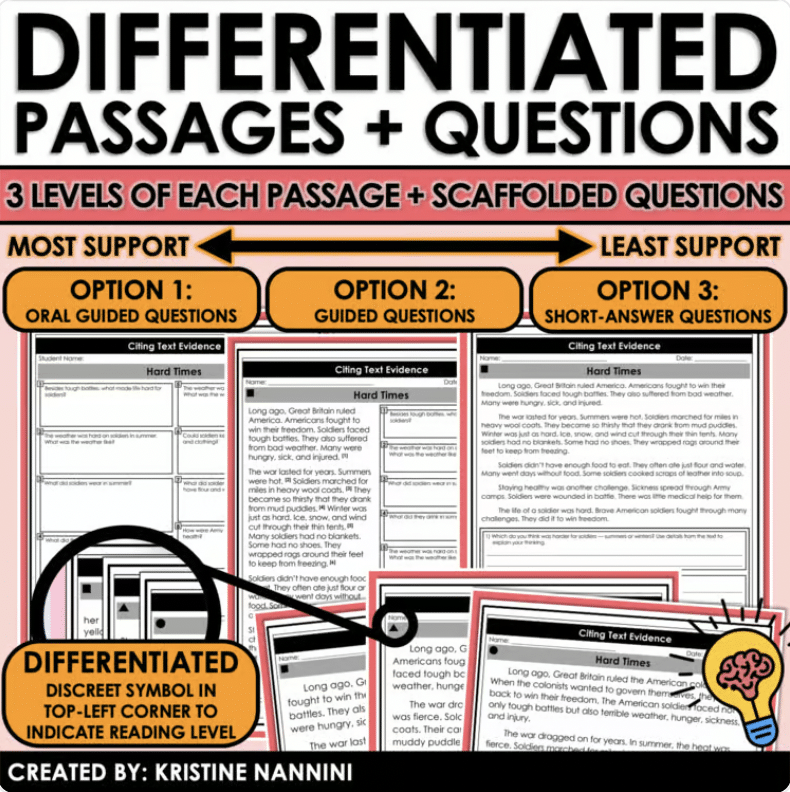
Differentiated Reading Passages & Questions
- 10 Nonfiction Passages at three differentiated reading levels
- Teacher copies include numbered stopping points to guide instruction and discussion
- Leveling Guide Included
- 300-390 Lexile Level
- 400-490 Lexile Level
- 500-590 Lexile Leve
Three Levels of Question Support
Use the scaffold that best fits each student’s needs:
- Option 1: Oral Guided Questions
Students respond verbally with teacher support - Option 2: Guided Questions
Sentence prompts help students organize their thinking - Option 3: Short-Answer Questions
Independent application of the skill
The scaffolded questions guide students to find evidence, select the most relevant detail, and explain how it supports their answer.
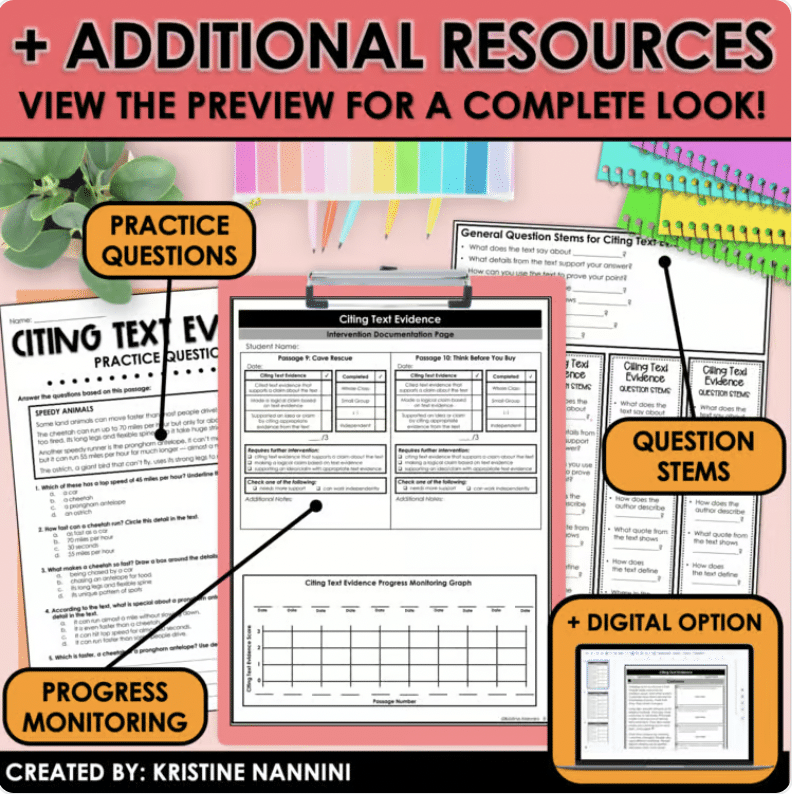
Intervention Documentation & Progress Monitoring
- Citing text evidence intervention documentation page
- Skill is broken down into clear, teachable components
- Notes section for observations, misconceptions, and next steps
- Progress Monitoring Graphing Tool
- Easy for students, teachers, interventionists, & administrators to track and see growth
Additional Teaching Resources
- Anchor chart or printable poster
- Practice questions
- General nonfiction citing text evidence question stems
- Printable bookmarks for students to keep with their own texts
Digital Option for Use with Google
- Option to go 100% paperless with this resource
★ Grade Level Recommendations★
5th Grade: Use this resource as an intervention for readers who have fallen significantly below grade level in reading comprehension.
4th Grade: Use this resource as an intervention for readers who have fallen below grade level in reading comprehension.
3rd Grade: Use this resource as an intervention for readers who have fallen slightly below grade level in reading comprehension.
Learning Targets
Students will be able to:
🎯 Locate relevant evidence in a nonfiction text
🎯 Select details that support a specific idea or question
🎯 Use sentence stems to cite evidence clearly
🎯 Explain how evidence supports their thinking
🎯 Apply evidence-based responses independently
Why Teachers Like You LOVE This Resource:
- “My students used to answer questions with their opinions instead of the text. This gave them a clear structure for finding and using evidence.” Amanda T.
- “Citing evidence was always a struggle for my intervention group. The sentence stems and scaffolds helped them explain their thinking clearly.” – Marcus L.
If you would like to get updates from me on NEW and CURRENT resources…
● FOLLOW me on Teachers Pay Teachers!
Click ★HERE★ to join my newsletter and be notified on new product releases.
★ Please note: If you are having difficulty with this file, please contact me.
Copyright© 2026 Kristine Nannini
All rights reserved by author.
Permission to copy for single classroom use only.
Electronic distribution limited to single classroom use only. Not for public display.
Be the first to review “Nonfiction Reading Intervention Passages + Questions: Citing Text Evidence”
Related products
-


-
Sale!


4th Grade Fiction + Nonfiction Reading Skills Review | Comprehension Bundle
Original price was: $16.00.$13.00Current price is: $13.00. -


-


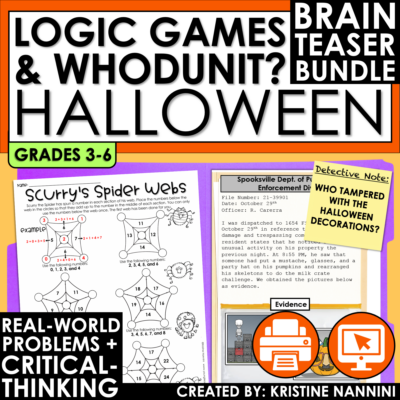 Halloween Math Logic Puzzles and Whodunit Bundle for Halloween Activities

Reviews
There are no reviews yet.